An untenable coalition
If you weren't closely following the daily movements of federal politics this month, yesterday's announcement that The Nationals have abandoned the Coalition must have been baffling.
Somehow, we got from 'The Nationals and Liberals are demanding parliament be recalled early to pass new laws in response to the Bondi terrorist attack' to 'The Nationals and Liberals are filing for divorce on the day designated to mourn the victims of the Bondi terrorist attack'.
Heck, it's a bit baffling even if you are following all the minutiae. And as Patricia Karvelas writes, some truly diabolical optics.
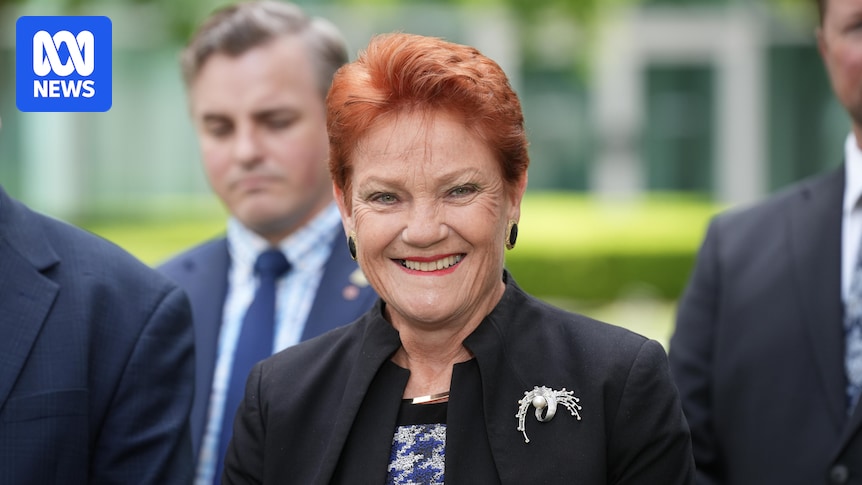
The Nationals say they're splitting because of Sussan Ley's handling of the hate speech bill, but it's impossible to ignore the broader context, including the difficult relationship between the parties, and how surge in One Nation support changes the political context. I've pulled together this explainer for ABC News with more on the threat One Nation now poses to the Nationals, and working through some of the possible scenarios going forward:

At the time of writing, it seems likely that Sussan Ley's time as Liberal leader is destined to end, perhaps quickly. We'll hear from Ley (who refused to make comment on the issue on the day of national mourning) in more detail today, but she's already told Sunrise that her leadership can survive.
And given David Littleproud's intervention into Liberal Party matters, there are real questions about whether his job might be on the line too. I'm sure there are many Liberals who don't appreciate the not-so-subtle hints he was dropping yesterday. Would they want to work with a man who has now pressed the nuclear button twice?
Further reading:
- Faced with a restless base and rising One Nation support, the Nationals chose to validate anger rather than risk confronting it. Walking out was safer than explaining compromise. (Rob Harris, SMH)
- The business model adopted by both Littleproud and Ley involves concealing their lack of authority by deferring to their party rooms and thus, both often end up being guided by the wishes of their right flank. (Paul Sakkal, SMH)
- Its understood the party is working towards a spill motion on Monday, February 2, the day before parliament resumes, with numbers already being counted. Mr Taylor, who was last night on his way back from Europe, and Mr Hastie have agreed to discuss whether they will team up or go it alone before any moves are made. (The Daily Telegraph)
- The Liberal-National Party Coalition is a very peculiar beast. It’s unlike any coalition arrangement anywhere in the world. Elsewhere, minor parties come together only after an election and negotiate a way to form government. (Linda Botterill, The Conversation)
Mark your calendars: the countdown to New Zealand's election has begun
If the Liberals and Nationals want some advice on making Coalition agreements that stick, maybe they should pick up the phone to New Zealand Prime Minister Christopher Luxon.
He's currently governing in a coalition with two minor parties, in an arrangement that was only brokered after the last election. The country uses a proportional system to allocate seats in parliament which makes majority governments rare, and like in many European countries, the negotiations over governing coalitions typically take place once the seats in parliament are known.
That process will occur once again this year, after Luxon this week announced that New Zealanders will go to the polls in just under 300 days. Yes, 300.
Like in Australia, the date of New Zealand elections is the prerogative of the Prime Minister. But there, a tradition has emerged that sees the PM announce the election date at the start of the election year. For people that hate the endless months of election date speculation, it's probably the next best thing to fixed terms.
Realistically, there weren't many dates available if the government wanted to run full term. So, November 7th it is.
Polling suggests Labour has gained ground at the expense of the conservative National Party, and at this early stage it looks like a tight contest. The right wing party of Deputy PM Winston Peters also appears to have gained some support through 2025.
For election watchers, November is shaping up to a be a busy month. New Zealanders vote a few days after the United States midterms, and a few weeks later Victorians get their turn in a state election.
I'll be busy, at least.
Further reading:
- Treasury forecasts suggest economic growth will kick into gear in the back half of 2026, giving good reason for Luxon to delay. (Justin Hu, 1News)
- Guide to the 2026 New Zealand election (Ben McKay, Canberra Times)
Japan to have (another) snap election
From one extreme to another: while Kiwis get months to mull their vote, Japanese voters are getting less than three weeks. Prime Minister Sanae Takaichi will shortly dissolve parliament and order snap elections for February 8.
The last elections were in October 2024 and resulted in the governing LDP losing its majority in parliament.
The LDP has been in power nearly continuously since 1955, with only two short periods out of government). It is not clear whether this election, being held more than 2.5 years earlier than required, will help the conservative party recover its majority.
Takaichi has labeled this essentially as a referendum on her four-month-old leadership, saying at a news conference:
"Is Sanae Takaichi fit to be prime minister? I wanted to ask the sovereign people to decide"
Continuing the theme of this post, Japan's government has also been having coalition troubles: the LDP's previous alliance with the party Komeito fell apart in October over disagreements with Takaichi, and the LDP formed a new coalition with the Japan Innovation Party.
(By the way, the leader of Komeito is a man named Tetsuo Saito, who has this truly wonderful 'personal life' section on his Wikipedia page:

Honestly? Same.)
Personally, I'm looking forward to seeing what the Japanese TV networks come up with for their results graphics. There is usually, as you would expect, a lot going on:
Japanese TV’s US election result monitoring screens are very busy. #Japan 🇯🇵🇺🇸 pic.twitter.com/cxBntSA3gE
— Melanie Brock (@melaniebrockjpn) November 4, 2020
At least Japanese TV is having fun with the election coverage...#Elections2020 pic.twitter.com/87PmLID1L6
— Matt O. マット (@supermattoworld) November 4, 2020
Further reading:
- Japan’s snap elections: A reckless risk or calculated gamble? (Lim Hui Jie, CNBC)
No spam, no sharing to third party. Only you and me.
Member discussion