New year, new website
Hello, and happy new year!
With this migration off Substack and onto a website I have full control of, I am intending to post a little bit more often than I have been. Most of my work continues to be over at the ABC News website, and so this is a space for the things that are more than a tweet but less than an article, the things that are a bit too academic, and a place for me to collect interesting news and links. A lot (but not all of it) will be about elections.
This newsletter also comes with a new website, which is still a work in progress and I would currently describe as "functional":


You can leave your comments to these posts with questions and suggestions. Subscribe if you want to get my updates by email, or you can always read them at my new and still partially under construction website.
Today: some stories that have caught my eye.
What lessons are the major parties taking from the 2025 election?
It was only last week that I wondered to myself when we'd see the major parties' reviews of their respective election campaigns. The reviews give us a more honest assessment than we usually get from parties, and by this point in the last electoral cycle, we'd seen them. Both the Liberal and Labor parties published their post-2022 reviews in December of that year.
So it's a big thanks to my ABC News colleague Patricia Karvelas with the timely scoop that the Liberal autopsy has been delayed over suggestions from Peter Dutton that it defames him and his staff.

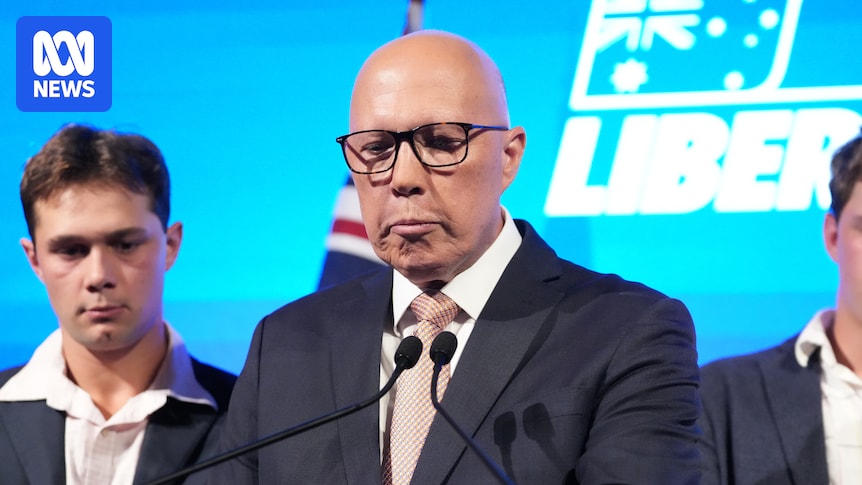
This document is supposed to help the party chart a course forward, toward party unity, greater popular support and, at some point, government. It's probably not a great omen that it is sparking internal fights and hints of legal action even before its publication.
While we wait, the Young Liberal movement has already produced its own take on the election loss. That document begins with the rather pointed statement that:
"We could choose to go down the path of culture wars, chasing after a mythical mass of suburban and/or blue collar voters who are supposedly ready and willing to vote Coalition. Or we could look at reality and realise that middle, modern Australia has decisively turned its back on the Coalition."
The Young Liberals blame a lack of "clear policy vision" which allowed Labor to control the campaign narrative. They call the Liberals' work-from-home policy a "catastrophic blunder", and for the party to focus its policies on reducing income tax, increasing home ownership through supply incentives, and having a "credible energy policy that incentivises private sector investment".
They also want less focus on legacy media in the future, and more on TikTok, Instagram and podcasting, writing: "The easy path would be to coddle ourselves within a media echo-chamber that thrives and trades on outrage and division."
One Nation support is going up, but by how much?
Don't expect me to do an ongoing play by play of all opinion polls published in this country, but a couple of interesting ones have just been published that demonstrate the difficulties we're having gauging the current level of support for Pauline Hanson's One Nation.
For the first time ever, One Nation has recorded higher first preference support than the Coalition in Newspoll. In the poll, conducted in mid-January for The Australian, Labor was at 32%, One Nation had 22%, and the Coalition was at 21%.
Resolve's first poll of the year was published on the same day in the Nine Newspapers, and returned markedly different figures: Labor on 30%, the Coalition on 28%, with One Nation 10 points behind on 18% (which is still a big number for a party that got 6.4% in the 2025 election).
Getting a reliable polling sample is always trickier around the new year with people away and hard to reach, and we've seen a lot of variability across the various polling outfits in the past couple of weeks. We shall have to see if the polls settle down at all once parliament is back and things get back into a more normal rhythm.
In other news
- Neo-Nazi group the National Socialist Network said it would disband due to the Albanese government's proposed hate speech laws. The group had signalled an intention to form a political party and run in elections. The announcement was made before it became clear that the laws would struggle to pass parliament this week, so the group's decisions from here will be interesting to watch.
- The FUSION party (full name: "FUSION | Planet Rescue | Whistleblower Protection | Innovation") has applied to change its official name to "vote fusion.org for big ideas", which feels like more of a slogan than a name but what would I know. I'm not sure if a party URL has ever appeared on a ballot paper in Australia before.
- Just before Christmas the Victorian Electoral Commission approved a party name change: the party formerly known as the "Companions and Pets Party" is now called "End Mass Immigration – Reform AU". It's unclear if they have a position on pet migration, but what is clear is that this new name stands out much more boldly on a ballot paper and is therefore more attractive to someone mounting a preference-harvesting strategy. The impact of this is greatly reduced if the Victorian parliament removes group voting tickets before this year's upper house election.
- Before the US presidential election comes the US primaries, and before the US primaries comes the bunfight over the rules for the primaries. The Democrats are currently trying to sort out the order in which states vote with a region-based process that seems to resemble the selection of a FIFA World Cup host nation. The chosen state in each of four regions gets to hold their presidential primary very early in 2028, and with it, gets an outsized influence on the outcome of the contest. According to the New York Times, New Hampshire and Delaware are competing in the East Region (Ken Burns has endorsed New Hampshire), while in the South, Tennessee is arguing it should get an early spot because for Democrats it would be "the single most impactful and organic data investment in our state voter file ever", helping in efforts to turn the state more blue.
- Party insiders in South Australia are dubious that the Adelaide Writers' Week fiasco will have much of an impact on March's state election. I tend to agree.
And on that note, I'm busily getting ready for the South Australian state election on March 21, watch this space for my guide to the election which is coming soon.
Until then, thanks for your company.
No spam, no sharing to third party. Only you and me.
Member discussion